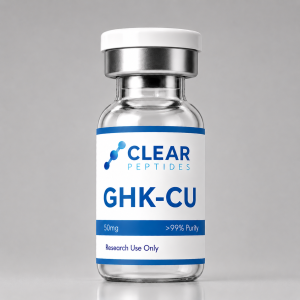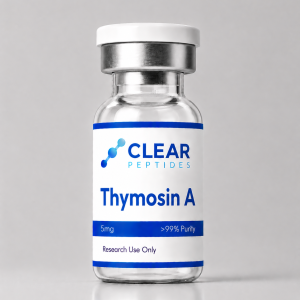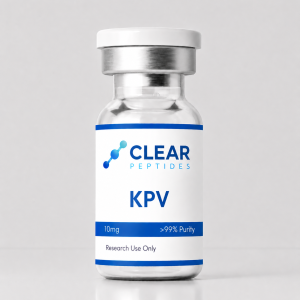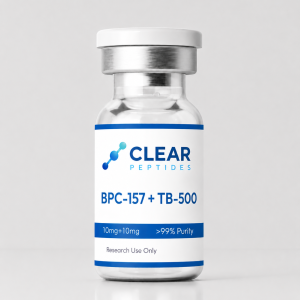
Description
Uncompromising Quality Control
At Clear Peptides, quality is verified through independent third-party analytical testing conducted on each production batch. Every peptide is supplied with lot-specific Certificates of Analysis (COAs) confirming identity, purity, and batch consistency.
All materials undergo RP-HPLC purity analysis and ESI-MS identity confirmation before release. No lot ships without passing both tests.
Quality Comparison
| Feature / Testing Standard | Clear Peptides | Other Labs (Avg.) |
|---|---|---|
| Standard COA (Qualitative & Quantitative) | ✔ Included with every lot | ✘ Often incomplete |
| RP-HPLC Purity Analysis | ✔ Every batch, ≥98% criterion | ✘ Inconsistently performed |
| ESI-MS Identity Confirmation | ✔ Every batch | ✘ Rarely provided |
| Lot-Specific Documentation | ✔ Permanently archived, retrievable | ✘ Often unavailable |
| US-Based Fulfillment | ✔ FedEx 2-Day cold-chain | ✘ Variable |
LL-37 — Research Overview
LL-37 is the only human member of the cathelicidin antimicrobial peptide family, comprising 37 amino acids with an amphipathic α-helical secondary structure. It is derived from the C-terminus of the hCAP18 precursor protein and represents one of the most extensively studied human host defense peptides.
Beyond its well-characterized antimicrobial activity, LL-37 functions as a multifunctional immunomodulatory peptide with documented interactions with pattern recognition receptors, cellular membrane dynamics, and multiple inflammatory signaling pathways.
Research Context Reported in Scientific Literature
LL-37 has been evaluated in laboratory environments as described in peer-reviewed publications. Observations below are from controlled preclinical research models and do not constitute clinical evidence.
- Antimicrobial mechanism research: Membrane disruption kinetics, minimum inhibitory concentration studies, and bacterial membrane interaction models
- TLR pathway modulation: Toll-like receptor 4 and 9 signaling pathway interaction and LPS-mediated immune response research
- Angiogenic signaling: VEGFR and FPRL1 receptor interaction research in endothelial cell migration and tube formation assays
- Biofilm disruption studies: Inhibition of biofilm formation and disruption of pre-formed biofilm in pathogen model systems
- Wound response signaling: Keratinocyte migration, proliferation, and re-epithelialization signaling research in wound model systems
These observations are exploratory and not conclusive.
Format & Handling
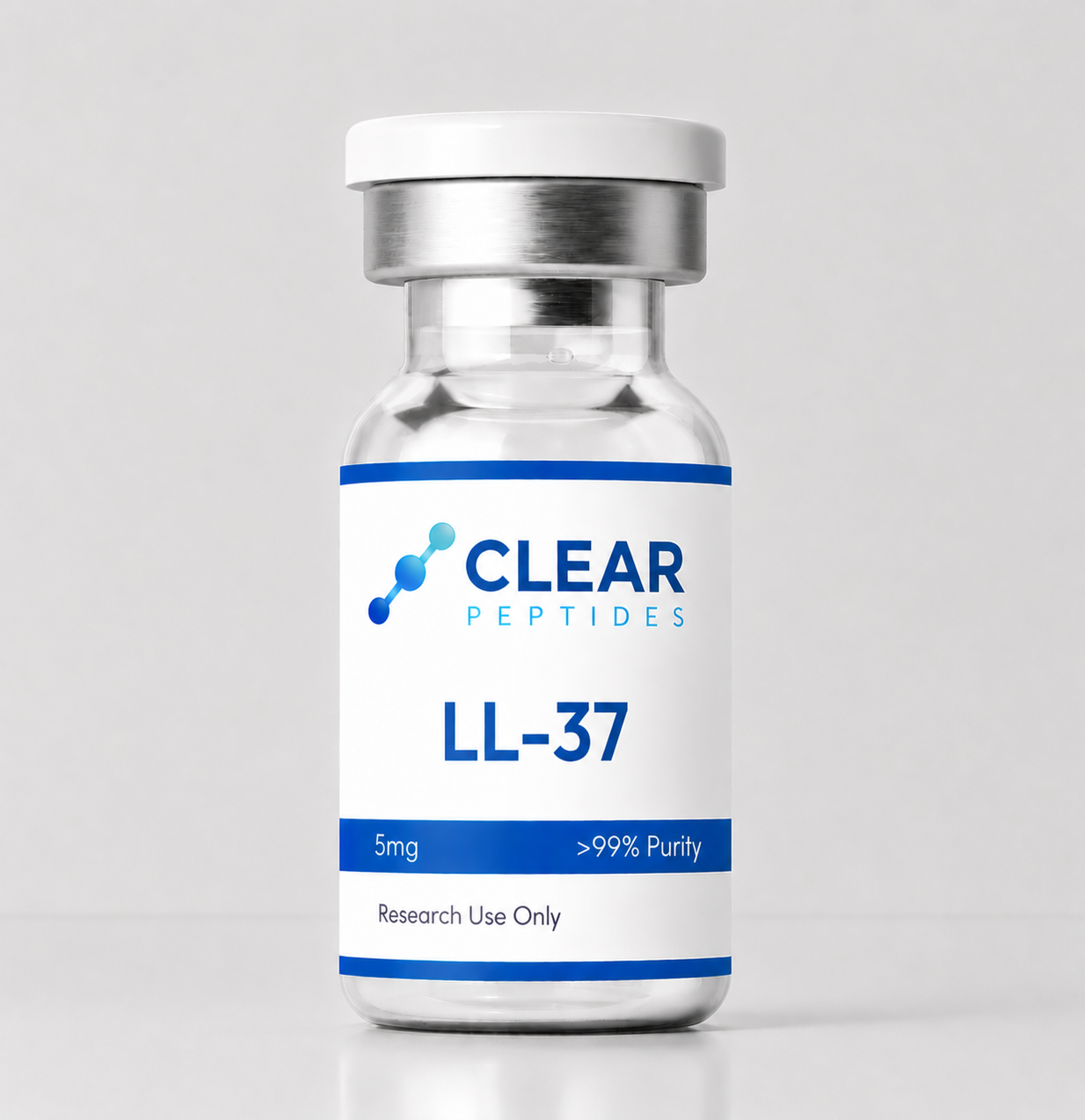
Supplied in sterile laboratory glass vials containing lyophilized peptide material. Reconstitution with bacteriostatic water or an appropriate laboratory solvent is required prior to research use.
Handling and storage should follow institutional laboratory protocols to maintain stability, purity, and analytical integrity. Store sealed vials at −20°C, protected from light and moisture.
Frequently Asked Questions
🚚 How fast is shipping?
Orders placed before 2PM PST ship same day via FedEx 2-Day with cold-chain packaging. Most orders arrive within 2 business days.
📦 When will I receive my tracking number?
Tracking is emailed immediately upon dispatch, typically within 24 hours of order placement.
🧪 How do you verify purity and quality?
Every lot undergoes independent third-party RP-HPLC purity analysis and ESI-MS identity confirmation. Lot-specific COAs are available via our COA Lookup tool.
💳 What payment methods do you accept?
We accept major credit cards via our secure Bankful payment gateway. All transactions are encrypted and processed securely.
↩️ What is your refund policy?
All sales are final unless the issue results from a verified error or quality failure on our part. See our Refund Policy for full details.
❄️ How should I store this product?
Lyophilized powder should be stored at −20°C in a sealed, desiccated container protected from light. Avoid repeated temperature cycling. After reconstitution, store at 2–8°C and use within 72 hours.
Intended Use: Research use only. Not for human consumption, medical, veterinary, or diagnostic use. Research findings are preliminary and do not imply safety or efficacy.